07. What is Firebase?
What Is Firebase?
Make an Account
Got to firebase.google.com and click on the **Get Started ** button seen below.

If you are not signed in to a Google account, You will be prompted to sign in or to create a new Google account. Follow the instructions. Once you are signed in, you should be able to click the Get Started button and that will take you to a welcome page where they will be options to add new project and explore demo projects.
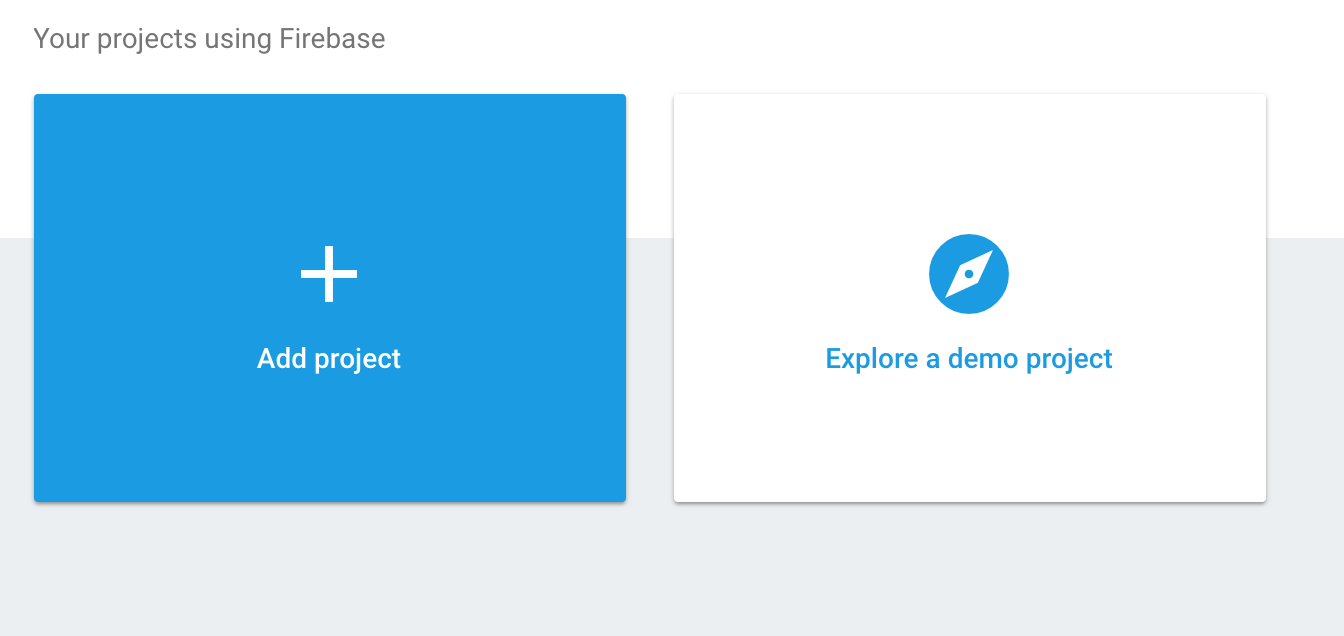
You'll be creating a new Firebase Project soon, but do not press the add project button yet! Instead, watch the next video to learn more.
Android and Firebase
Firebase contains a lot of features (many of which are free) which I don't have time to cover here. They include:
- Analytics - Tons of data about your apps users and usage
- Authentication - User authentication which includes email/password, Facebook, Twitter, Github and Google Sign-In
- Realtime Database - NoSQL database which automagically syncs with all devices with the app downloaded
- Storage - Space and SDKs to allow users to upload user generated content
- Hosting - Production grade hosting
- Test Lab - Test your app on multiple phone generations and devices
- Crash Reporting - Records and reports when your app crashes for users
- Notifications - This is part of FCM and we'll be talking more about this
- Remote Config - Customize your app on the fly or run A/B tests with ease
- App Indexing - Drive organic search traffic to your app
- Dynamic Links - Send users to a screen in your app using a link
- Invites - Allow users to invite each other to your app
- AdWords - Run advertisement campaigns to get more app users
More information about these features and links out to documentation can be found here.
If you're interested in learning about Android and Firebase, consider taking Udacity's Firebase in a Weekend course for Android. The class is free and walks you through the creation of a real time chat app with user accounts, photo sharing and more, using Firebase as a backend.